

How to Apply Hairline Powder for Thin Hair in 5 Steps
Table of Contents
- What Is Hairline Powder and How Does It Work?
- How to Choose Hair Powder Shade for a Natural Match
- What You'll Need Before You Start
- Step-by-Step: How to Apply Hairline Powder for Thin Hair
- Best Hairline Powder for Thinning Hair: What to Look For
- How to Remove Hair Thickening Powder the Right Way
- Common Mistakes to Avoid
- Conclusion
- Frequently Asked Questions
Last Updated: September 8, 2026
Hairline powder is a cosmetic concealer designed to temporarily fill in thinning areas along the scalp, hairline, and part line, creating the visual appearance of fuller, denser hair. For anyone dealing with thinning hair, the application method makes the difference between an invisible fix and an obvious cover-up. This guide walks through the exact technique, from choosing the right shade to removal tips that protect your scalp.

The learning curve is shorter than most people expect. Unlike hair fibers, which can scatter and cling to clothing, powder sits directly on the scalp and blends into the surrounding hair. That's why many users now prefer powder-based solutions over traditional fibers, reporting that it is easier to use and delivers better first-time results, as discussed in community discussions on hair loss products. The key is treating it like makeup for your scalp, not like a styling product.
What Is Hairline Powder and How Does It Work?
Hairline powder is a finely milled, pigment-based cosmetic that adheres to the scalp to reduce the contrast between exposed skin and surrounding hair. It works through simple optical coverage: the powder deposits color onto the scalp, masking visible skin in areas where hair density has dropped. The result is an immediate, matte finish that mimics the look of natural hair growth.
The formula matters more than most guides admit. Quality powders use a dry, buildable texture that layers without clumping, which is essential for surviving everyday movement. Many formulas are now water-resistant and sweat-proof, a significant upgrade for anyone who exercises or lives in humid conditions. A quick visual demonstration of this instant coverage approach was showcased when Kim Kimble Hair Salon applied hair loss powder on the Rachael Ray Show, transforming a visibly thinning hairline into what appeared to be a full head of hair in moments.
How to Choose Hair Powder Shade for a Natural Match
Choosing the correct shade is the single most important factor for a believable result. The goal is to match the darkest tone within your natural hair, not the lightest. This creates depth that mimics real hair density, where shadows naturally fall at the roots.
Start by examining your hair in natural daylight, not bathroom lighting. Pull a section of hair up and look at the root color near the scalp. That is your target shade. For gray or silver hair, select a shade that matches the overall tone rather than individual white strands, since pure white powder can look chalky. Multi-shade palettes solve this problem elegantly. When in doubt, a slightly darker shade blends more convincingly than one that is too light, which can create a visible halo effect around the hairline.
What You'll Need Before You Start
Gather your tools before you begin to keep the process quick and mess-free. You need the powder itself, an applicator, and a mirror with good lighting. Most quality hairline powders include a sponge applicator or brush, but having a dedicated angled brush helps with precision along the hairline.
A common mistake is applying powder to hair that is damp or freshly styled with wet products. Applying powder over gels, serums, or creams can prevent the pigment from adhering properly to the hair and scalp, as noted by Boldify's application guidance. The powder needs a dry surface to grip. If you use styling products, apply the powder last, after everything else has dried completely. A scalp massager is a helpful addition to your routine, not for application, but for the end of the day to help loosen powder before washing.

Step-by-Step: How to Apply Hairline Powder for Thin Hair
The application technique breaks down into three core actions: prep, apply, and blend. Master these and the whole process becomes second nature.
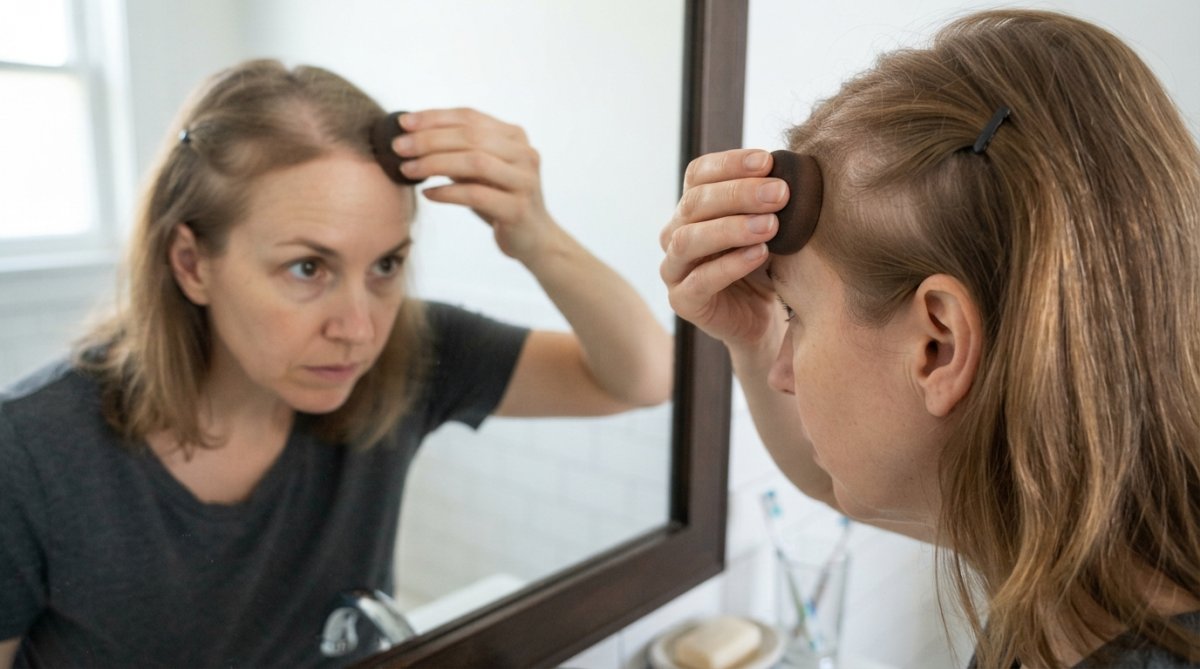
Step 1: Start With Clean, Dry Hair
Begin with completely dry, product-free hair. Brush your hair into its usual parting and style as you normally would. If you plan to use any volumizing products or texture sprays, apply them now and allow them to dry fully before moving to the next step.
Step 2: Apply the Powder in a Sweeping Motion
Dip the applicator lightly into the powder and tap off any excess. Using a gentle sweeping motion, apply the powder directly onto the exposed scalp, working from the outside of the thinning area toward the center. This directional motion helps the powder catch on the surrounding hair cuticles, anchoring it in place.
Step 3: Blend and Build Coverage
Blend the edges immediately while the powder is still loose. Use a clean brush or your fingertip to soften the border where the powder meets your hair. Build coverage in thin layers, adding more powder only where the scalp is still visible. The finished result should have a matte finish with no visible line of demarcation. One social demonstration from Prime Prometics highlights how effective this layering approach is for filling in thinning areas and covering gray roots with a natural appearance.
Best Hairline Powder for Thinning Hair: What to Look For
When shopping for the best hairline powder for thinning hair, prioritize four factors: shade range, water resistance, texture, and applicator quality. A broad shade range allows for precise color matching. Water resistance determines whether the product survives sweat, rain, or an accidental splash. The texture should be fine enough to look like natural hair pigment, not heavy like face powder.
The global hairline powder market outlook reflects growing demand for these cosmetic solutions, with the category valued at roughly USD 0.1 billion in 2026 and projected to hold that valuation through 2035. That staying power suggests this is not a passing trend but a staple for many people managing the appearance of thinning hair. A versatile option like the 14-Color Hairline Powder Concealer covers the full spectrum of needs with a waterproof formula and enough shades to match most hair colors precisely.
| Feature | Why It Matters | What to Check |
|---|---|---|
| Shade range | Enables precise color matching | 10+ shades or mixable palette |
| Formula | Determines natural look and wear | Matte finish, buildable texture |
| Water resistance | Survival through sweat and rain | Waterproof or sweat-proof claim |
| Applicator | Affects precision and ease | Sponge tip or angled brush included |
The Missing Factor: Compatibility With Hair Loss Treatments
Most buying guides ignore the single most important question for the target audience: does this powder interfere with my active hair loss treatment? If you are using minoxidil (Rogaine, available over-the-counter in the United States), finasteride (Propecia, prescription-only), or ketoconazole shampoo (Nizoral), the order of operations matters.
Minoxidil and hairline powder: Minoxidil needs to absorb into the scalp to work. Applying powder on top of freshly applied minoxidil creates a barrier that can reduce absorption and leave a pasty residue. The correct sequence: apply minoxidil first, wait 30 to 45 minutes for it to dry completely, then apply hairline powder. If you apply minoxidil twice daily, plan your powder application for the morning dose only, and wash it off before the evening dose.
Ketoconazole shampoo: If you use Nizoral or a generic ketoconazole 1% shampoo two to three times per week, apply it on days when you are not planning to wear powder, or use it as your removal wash at the end of the day. Ketoconazole needs contact time with the scalp, typically five minutes, so do not rush it.
Topical finasteride or DHT-blocking serums: These are typically applied once daily, often at night. Apply them to a clean, powder-free scalp before bed. In the morning, if you need coverage, apply powder over the dried serum. Most serums absorb within 15 to 20 minutes, so morning application followed by powder is safe as long as the serum is fully dry.
Sweat and Water Resistance: What the Label Actually Means
"Water-resistant" and "sweat-proof" are marketing terms, not regulated claims in the United States. The FDA does not define these terms for cosmetics. In practice, most hairline powders use hydrophobic ingredients like silica or dimethicone to repel moisture. The practical test: apply the powder, wait five minutes, then gently press a tissue against the area. If the tissue picks up pigment, the powder will likely transfer to clothing or pillowcases during the day.
For exercise, expect some wear regardless of the formula. Sweat that pools at the hairline, not light perspiration, is what breaks down powder. If you work out mid-day, carry a small touch-up sponge.
Ingredient Checklist for Sensitive Scalps
If you have a sensitive scalp or are prone to folliculitis, check the ingredient list before buying. Safe, common ingredients in quality hairline powders include:
- Iron oxides, the color pigments; FDA-approved for cosmetic use
- Mica, provides the natural shimmer that mimics hair shine
- Silica, absorbs oil and improves adherence
- Kaolin clay, helps the powder grip dry skin
Avoid formulas with:
- Fragrance or parfum, unnecessary and a common irritant
- Bismuth oxychloride, can cause itching in sensitive individuals
- Bismuth subnitrate, occasionally used in darker shades; can irritate
A final note on shade selection for those using hair loss treatments: minoxidil can cause initial shedding and changes in hair texture during the first few months. Re-evaluate your shade match every three months rather than assuming your original match still works.
How to Remove Hair Thickening Powder the Right Way
Removing hair thickening powder is straightforward, but doing it correctly protects your scalp and your pillowcases. The powder breaks down easily with standard shampoo, so a single wash is usually sufficient. The mistake people make is scrubbing aggressively, which can irritate the scalp and tangle fine hair.
Use lukewarm water and a gentle shampoo, massaging with your fingertips in circular motions. Focus on the areas where you applied the powder. Rinse thoroughly and follow with your regular conditioner. If you applied a heavy layer, a double cleanse may be necessary. Experts advise using the powder sparingly in the first place, as excessive application can lead to buildup on the scalp over time, according to Hims hair care guidance. A scalp massager with soft silicone bristles can help lift any residual product during washing while stimulating circulation.
The Scalp Health Angle Most Guides Miss
Most application guides stop at "wash it off," but for anyone using hairline powder daily, the real question is whether the product affects follicle health over time. The concern is not toxicity, most quality powders use iron oxides and mica, the same pigments approved for cosmetic use in the United States by the FDA. The real issue is mechanical: powder particles can accumulate in the follicle opening when combined with sebum, sweat, and dead skin cells.
This does not mean hairline powder is unsafe. It means that a weekly scalp detox should be part of your routine if you wear powder five or more days per week. A simple protocol: once per week, apply a salicylic acid-based scalp treatment to the areas where you apply powder, leave it on for five minutes, then rinse thoroughly before your normal shampoo. For those with sensitive skin, a gentler alternative is a clarifying shampoo with apple cider vinegar, used no more than once every seven to ten days.
What to Do If You See Irritation
If you notice redness, itching, or small bumps along the hairline after starting a powder routine, stop use for three to five days and observe. If the irritation clears, the powder was likely the trigger. Check your formula for fragrance or bismuth oxychloride, a common ingredient in some concealers that can cause contact dermatitis in sensitive individuals. Switch to a fragrance-free, mineral-based formula and patch test behind your ear for 24 hours before reapplying to your hairline.
Nighttime Removal Protocol
Never sleep in hairline powder. Beyond the transfer onto pillowcases, overnight wear extends the contact time between pigment particles and your scalp, increasing the chance of buildup. If you are too tired for a full wash, at minimum use a micellar water on a cotton pad to wipe the hairline and part line before bed. For a deeper clean, double-shampooing once a week with a scalp brush, not your fingernails, will keep the follicle openings clear without stripping your hair.
The bottom line: hairline powder is safe for daily use when removal is treated as a scalp-care step, not just a cosmetic one. A consistent cleansing routine protects both your scalp health and the longevity of your remaining hair.
Common Mistakes to Avoid
The most frequent error is choosing the wrong shade, which ruins the effect immediately. Another is applying too much powder at once. Heavy application looks cakey and increases the risk of transfer onto collars and pillows. Build coverage gradually instead.
Applying to damp hair is another common pitfall. The powder will not adhere properly and may streak. Similarly, rubbing the powder in rather than sweeping it on can disturb the hair underneath and create unnatural separation. Finally, do not forget to blend the edges. A visible border around the hairline is the clearest sign that a concealer is being used.
Conclusion
Mastering how to apply hairline powder for thin hair comes down to preparation, shade selection, and a gentle sweeping technique. Start with dry hair, build coverage in thin layers, and always blend the edges for a natural finish. Atlantic Shop carries the tools you need, including the 14-Color Hairline Powder Concealer with its waterproof, buildable formula, plus the Hair Scalp Massager for gentle removal. Every order ships within 24-48 hours with simple returns and secure payment, so you can try the routine without the wait. Get started with Atlantic Shop.
Frequently Asked Questions
Is hairline powder safe for thinning hair?
Yes, hairline powder is generally safe for thinning hair. It is a cosmetic concealer made from pigments and minerals that sit on the scalp and hair strands, not in the follicle. To protect scalp health, apply it sparingly and wash it out daily with regular shampoo. If you have sensitive skin or active scalp conditions, do a patch test first. Avoid applying powder over open sores or irritated skin.
Does hairline powder wash out easily?
Hairline powder washes out easily with standard shampoo and water. Unlike dyes or chemical treatments, there is no need for special solvents. Use a gentle massaging motion to lift the powder from the scalp, then rinse thoroughly. Some water-resistant formulas may require a second wash. To prevent buildup, always remove the powder before going to bed.
Can you use hairline powder on wet hair?
No, you should not apply hairline powder to wet hair. The powder needs a dry surface to adhere to the scalp and hair strands. Applying it over wet styling products like gels or serums will cause clumping and reduce the product's ability to stick. If you use styling products, wait until they are completely dry before applying the powder.
How long does hairline powder last throughout the day?
A quality hairline powder typically lasts 8 to 12 hours when applied to clean, dry hair. Look for formulas labeled water-resistant or sweat-proof for better endurance. To extend wear, avoid touching the area and set the powder with a light hairspray. If you have an active day, carry it for quick touch-ups on the hairline and part line.