

Simple Ways to Improve Daily Routine: 12 Easy Habits
Table of Contents
- Why Small Changes Beat Overhauling Your Daily Routine
- Morning Routine Checklist for Productivity: 5 Steps to Start Strong
- Habit Stacking: The Neuroscience Trick for Lasting Daily Routine Changes
- 15 Minute Full Body Workout for Beginners: Move More Without a Gym
- Evening Wind-Down Rituals for Better Mornings and Deeper Sleep
- Digital Detox and Screen Time Management for Mental Clarity
- Best Home Wellness Tools for Daily Routines: What Actually Helps
- Common Mistakes That Sabotage Your Daily Routine
- Frequently Asked Questions
Last Updated: September 7, 2026
Most people abandon their resolutions by mid-February, not because they lack discipline, but because they try to overhaul everything at once. A sustainable daily routine is built on small, repeatable actions that compound over time. This guide from Atlantic Shop covers simple ways to improve daily routine without turning your life upside down.
The real secret isn't motivation; it's structure. Tiny adjustments to your mornings, movement, and evenings create a framework for better energy, focus, and mood.
Why Small Changes Beat Overhauling Your Daily Routine
The biggest mistake with daily routine improvement is trying to change everything at once. A daily routine responds better to gradual adjustments than sudden shocks. Complete overhauls rely on willpower, which depletes quickly.
Behavioral science shows habit formation succeeds when the new behavior feels almost effortless. Instead of an hour at the gym, commit to five minutes of stretching. Instead of a full diet remodel, add one serving of vegetables to lunch. Small wins build momentum.
The Neuroscience of Habit Formation: Why Small Wins Work
Your brain resists large, sudden changes. The basal ganglia automate repeated behaviors, while your prefrontal cortex, responsible for decision-making and self-control, must actively work to execute new behaviors. Small changes require minimal prefrontal cortex activation, allowing behavior to become automated more rapidly.
This is where the dopamine loop becomes critical. Every habit follows a three-part cycle: cue, routine, and reward. Completing a small routine and experiencing a reward, even a subtle one like checking a box, releases dopamine, strengthening the neural pathway connecting the cue to the routine. Over time, the pathway becomes myelinated, making the habit feel automatic.
The 2-Minute Rule and Implementation Intentions
Two evidence-backed strategies operationalize this science. The first is the 2-Minute Rule, popularized by James Clear in Atomic Habits: when you start a new habit, it should take less than two minutes to complete. Instead of "exercise for 30 minutes," your initial habit is "put on my running shoes." This lowers activation energy so the behavior becomes almost impossible to refuse.
The second strategy is implementation intentions, developed by psychologist Peter Gollwitzer. This involves pre-deciding when and where you will perform a behavior using the formula: "When [situation] arises, I will perform [behavior]." For example, "When I finish my morning coffee, I will do 10 minutes of stretching." Research in the British Journal of Health Psychology found participants using implementation intentions were more than twice as likely to adhere to an exercise program compared to a control group (PubMed). Pre-deciding the cue removes the need for in-the-moment decision-making.
Why Willpower Is a Poor Foundation for Change
Willpower is not a character trait; it is a cognitive function that fatigues with use. Roy Baumeister's landmark study at Case Western Reserve University demonstrated this phenomenon, known as ego depletion, explaining why your resolve to eat healthy often crumbles by 8 PM. Relying on willpower to overhaul your routine sets you up for failure.
Small changes circumvent this problem because they require minimal self-control. Once a behavior becomes automatic, it no longer draws from your willpower reserves. This is why the most sustainable routines are built on micro-habits that gradually expand in scope.
The Role of Context and Environment in Habit Formation
Another often-overlooked factor is your physical environment. Your brain associates cues with specific contexts, so design your environment to make good habits the path of least resistance. If you want to read more, place a book on your pillow. If you want to stretch in the morning, lay out your yoga mat the night before.
Morning Routine Checklist for Productivity: 5 Steps to Start Strong
A morning routine checklist for productivity should take less than 30 minutes and set the tone for the entire day. The goal is to win the first hour.
- Hydrate immediately (2 minutes): Drink a full glass of water before coffee to rehydrate after sleep.
- Make your bed (2 minutes): This small task creates an instant sense of order and achievement.
- Move your body (10 minutes): Do light stretching or a quick walk to wake up your muscles and circulation.
- Plan your top three (5 minutes): Write down the three most important tasks for the day, not a long to-do list.
- Eat a protein-forward breakfast (10 minutes): This stabilizes energy levels and prevents mid-morning crashes.
Consistency is the key ingredient here. Your circadian rhythm responds to predictable cues, so waking and starting your routine at the same time daily helps regulate your internal clock and improves sleep quality over time CDC guidance on sleep and circadian rhythms.
Habit Stacking: The Neuroscience Trick for Lasting Daily Routine Changes
Habit stacking attaches a new behavior to an existing one, using neural pathways already wired in your brain. The formula is simple: "After I do [current habit], I will do [new habit]." Because your brain already performs the first action automatically, the second action inherits that automaticity.
Your brain forms habits through a loop of cue, routine, and reward. By using an existing habit as the cue, you bypass conscious decision-making, where most resolutions die. "After I brush my teeth, I will do 10 squats" is far more likely to stick than "I will exercise more."
This approach is particularly effective for busy people who struggle with time management. It doesn't require extra time in your calendar; it piggybacks on routines you already have.
15 Minute Full Body Workout for Beginners: Move More Without a Gym
You don't need equipment or a gym membership for a meaningful 15 minute full body workout for beginners. The key is to use compound movements that engage multiple muscle groups simultaneously.
Try this circuit, performing each exercise for 45 seconds with 15 seconds of rest between them:
- Bodyweight squats (legs and glutes)
- Push-ups on knees or toes (chest, shoulders, arms)
- Plank hold (core and stability)
- Reverse lunges (legs and balance)
- Glute bridges (glutes and lower back)
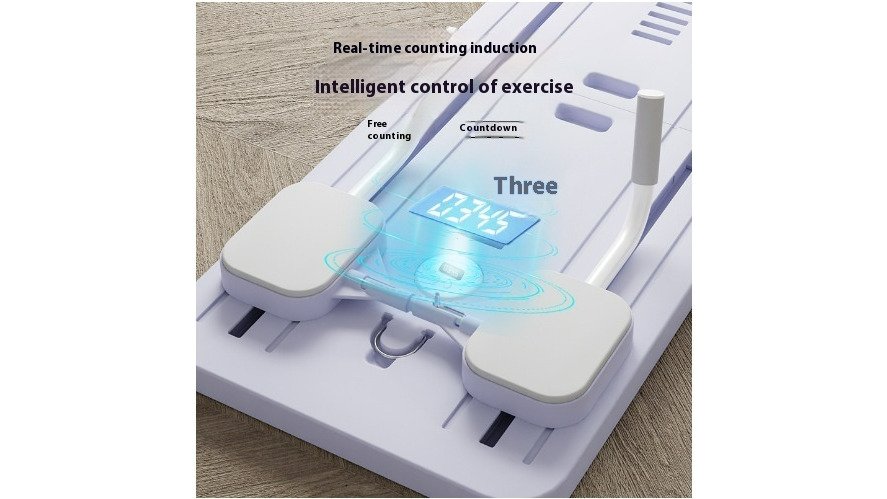
Complete the circuit twice for a total of 15 minutes. This routine elevates your heart rate, builds strength, and supports cognitive function through increased blood flow. For added resistance and structure, the Multifunctional Fitness Board at $292.99 provides multiple grip positions for push-ups, planks, and core work.
Evening Wind-Down Rituals for Better Mornings and Deeper Sleep
Your daily routine doesn't end when you log off work; it ends when you fall asleep. An effective evening wind-down ritual is the bridge to better mornings, as sleep quality directly dictates your energy levels and mental clarity the next day.
Start your wind-down by setting a "digital sunset" one hour before bed. This means no screens, no work emails, and no social media. The blue light from devices suppresses melatonin production, disrupting your circadian rhythm and making it harder to fall asleep NIH research on blue light and sleep.
Replace screen time with calming activities: light stretching, reading a physical book, or taking a warm shower. Creating a relaxing atmosphere can be enhanced with tools designed for restoration, such as the Simulated Flame Aroma Diffuser at $67.99, which combines a humidifier with soothing LED lighting and essential oil diffusion to signal your body that it's time to rest.
Digital Detox and Screen Time Management for Mental Clarity
Screen time is the silent saboteur of many daily routine improvements. Notifications fragment your attention, and constant scrolling keeps your brain in a state of low-level stimulation that makes deep focus difficult. A digital detox doesn't mean abandoning your devices; it means setting intentional boundaries around them.
A practical approach is to designate "no-phone zones" in your day. Keep your phone out of the bedroom to improve sleep hygiene. Use time blocking to schedule specific periods for checking email and social media, rather than responding to every ping immediately.
For stress management during the workday, physical outlets are effective. A compact tool like the Stress Reliever Mini Punching Bag at $40.99 offers a quick, physical release for tension, helping you reset and return to tasks with better focus.
Best Home Wellness Tools for Daily Routines: What Actually Helps
When considering the best home wellness tools for daily routines, the goal is to find items that remove friction from your healthy habits. The right tool makes a behavior easier to perform.
For personal care and grooming, tools that save time are valuable. The Hair Scalp Massager at $22.99 enhances circulation during your shower routine and works on all hair types. The Electric Stick Facial Massager at $24.99 adds a quick, relaxing step to your skincare regimen.


For recovery and stress relief, the Walk Stone Foot Pain Relief Massager Mat at $15.99 is an affordable addition for anyone who stands for long hours. Oral hygiene is another area where small upgrades matter; the Portable UV Toothbrush Sterilizer at $52.99 helps keep your brush germ-free with minimal effort.

| Tool | Price | Primary Benefit | Best For |
|---|---|---|---|
| Walk Stone Massager Mat | $15.99 | Foot pain relief | Standing for long hours |
| Hair Scalp Massager | $22.99 | Scalp circulation | Shower routine enhancement |
| Electric Stick Facial Massager | $24.99 | Skincare and relaxation | Quick beauty routine |
| Stress Reliever Mini Punching Bag | $40.99 | Stress management | Desk breaks and focus |
| Simulated Flame Aroma Diffuser | $67.99 | Sleep and ambiance | Evening wind-down |
Common Mistakes That Sabotage Your Daily Routine
Even with the right intentions, subtle errors can derail your progress.
Mistake 1: Overcommitting to too many habits at once. Adding five new habits simultaneously divides your attention and drains your willpower. The fix is to implement one habit at a time.
Mistake 2: Ignoring your natural energy rhythms. Forcing deep work during your natural afternoon slump is fighting your biology. Schedule demanding cognitive tasks during your peak energy window.
Mistake 3: Treating rest as a reward, not a requirement. Skipping rest to "get ahead" often backfires. Restoration is critical for cognitive function and physical health.
Mistake 4: Not adapting your routine to your needs. A rigid routine that doesn't account for your neurodivergence or changing circumstances is a recipe for failure. The best daily routine is one you can adjust.
The Rigid Routine Trap: Why One-Size-Fits-All Fails
The most pervasive mistake is adopting a routine designed for a neurotypical, 9-to-5 schedule without considering your unique brain wiring. For individuals with ADHD, autism, or other neurodivergent conditions, standard advice like "wake up at 5 AM" can be counterproductive. Executive function differences mean time blindness, task initiation, and transitions are processed differently, so a rigid schedule can trigger anxiety and shame.
The ADHD-Specific Challenge: Interest-Based Nervous System
Many ADHD adults operate on an interest-based nervous system, not a priority-based one. Motivation is driven by interest, challenge, urgency, or novelty, not importance or deadlines. Standard productivity advice that relies on prioritization often fails because it doesn't address this neurological driver.
A practical alternative is body doubling, where you work alongside another person, physically or virtually, to anchor your attention. Another is time chunking, setting a timer for 15 minutes of focused work followed by a 5-minute break.
The Autistic Experience: Predictability and Sensory Load
For autistic individuals, routines are often essential for reducing anxiety and creating predictability. However, the mistake is making the routine so rigid that any disruption causes significant distress. The key is to build flexible predictability, a routine that has a consistent structure but includes built-in buffers for unexpected changes. For example, instead of scheduling every minute, schedule blocks of activity with a "transition buffer" of 10 minutes between them.
Sensory processing is another critical factor. A routine that includes a morning shower might be overwhelming for someone with sensory sensitivities. An alternative might be a sponge bath or a quick rinse with a low-flow showerhead. Similarly, a workspace with harsh fluorescent lighting can be a barrier to focus; switching to a warm-toned desk lamp can make a significant difference. A routine is not a moral obligation; it is a tool to support your well-being.
The Flexibility Framework: Designing for Adaptation
Instead of a rigid daily schedule, consider a flexibility framework with three tiers:
- Non-negotiables (2-3 items): These are the habits that anchor your day, such as taking medication, eating a meal, or getting fresh air. These should be scheduled at the same time daily to provide structure.
- Flexible blocks (3-4 items): These are tasks that need to happen but can occur within a time window. For example, "exercise between 3 PM and 6 PM" rather than "exercise at 4 PM."
- Optional extras (1-2 items): These are activities that are nice to do but not essential. If you skip them, there is no guilt.
This framework allows for the predictability that many people need while accommodating the variability that life, and neurodivergence, inevitably brings. It also reduces the shame associated with "failing" a routine.
The All-or-Nothing Mindset
A final common mistake is the all-or-nothing mindset. Missing one day of exercise or one healthy meal is often treated as a total failure, leading to a complete abandonment of the routine. This cognitive distortion, known as the what-the-hell effect, is well-documented in behavioral psychology. The fix is to adopt a "never miss twice" rule. If you miss a habit on Monday, you absolutely must do it on Tuesday. This prevents a single lapse from becoming a permanent relapse.
Frequently Asked Questions
What is the 3-3-3 rule for habits?
The 3-3-3 rule is a time management method that structures your workday into three parts: 3 hours of deep, focused work on your most important task, 3 hours on medium-priority tasks like meetings or emails, and 3 smaller tasks like admin or planning. Applied to building a daily routine, it helps you prioritize what matters most before reactive tasks take over. Start by identifying your one big task each morning and protect those first three hours from interruptions.
How long does it take to form a new habit?
Research suggests it takes an average of 66 days for a new behavior to become automatic, though the range varies from 18 to 254 days depending on the person and the complexity of the habit. Simple habits like drinking water after waking may form faster, while complex routines like daily exercise take longer. The key is consistency, not perfection. Missing one day does not reset your progress, so focus on getting back on track the next day rather than aiming for an unbroken streak.
How can I make my daily routine more efficient?
Start by tracking how you actually spend your time for two or three days. You will likely find pockets of wasted time, like 20 minutes of scrolling after lunch. Batch similar tasks together, such as answering emails twice a day instead of constantly. Use a morning routine checklist for productivity to eliminate decision fatigue early. For fitness, a 15 minute full body workout for beginners done at home removes travel time and gym wait. Small efficiency gains compound into over an hour saved daily.
What are the best home wellness tools for daily routines?
The best tools are the ones you will actually use consistently. For movement, a compact multifunctional fitness board enables a 15 minute full body workout for beginners without leaving home. A foot pain relief massager mat under your desk provides passive relief during work hours. For stress, a mini punching bag offers a quick physical outlet during breaks. An aroma diffuser with a simulated flame can signal wind-down time in the evening. Start with one tool that addresses your biggest pain point rather than buying everything at once.